Deep Rock Galactic: Survivor
Ghost Ship Publishing ApSArcade
4.81.46K Reviews
- Version
- 1.2.6
- Installs
- 1.00M
- Age Rating
- Teen
Screenshots
Our Review of Deep Rock Galactic: Survivor
 Analysis by Appyee
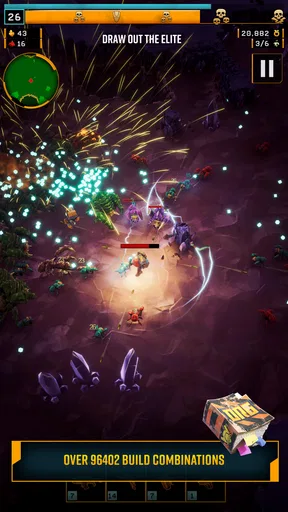
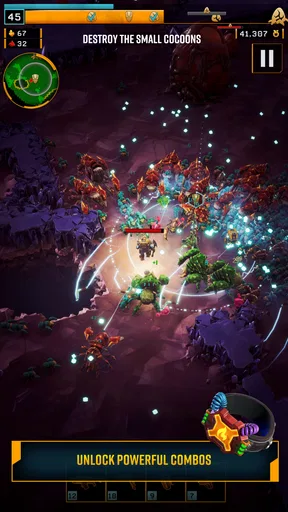
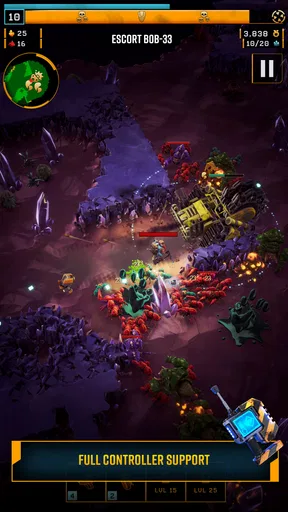
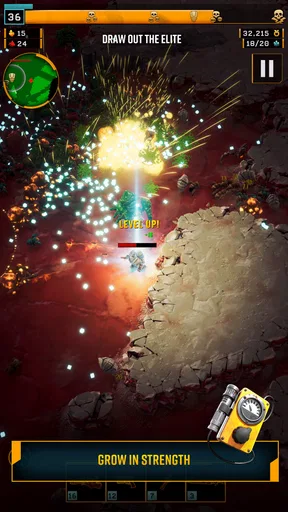
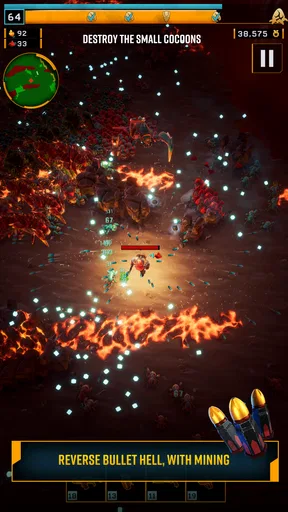
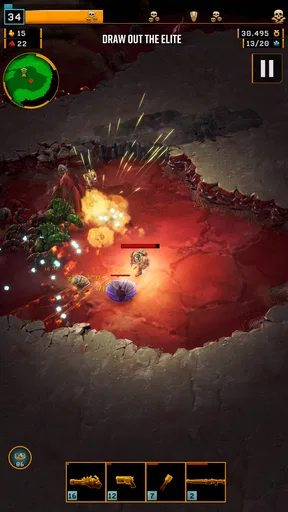
On a short break, I want a game that gets me into the action quickly, gives me a clear reason to try again, and doesn’t demand that I coordinate with a group. That is the appeal I look for in Deep Rock Galactic: Survivor: an arcade take on a familiar sci-fi mining world, built around surviving hostile caverns rather than treating every outing as a long cooperative expedition. It is a roguelike reverse bullet hell, so the core pleasure is less about aiming every shot yourself and more about steering through danger while your character fights back.
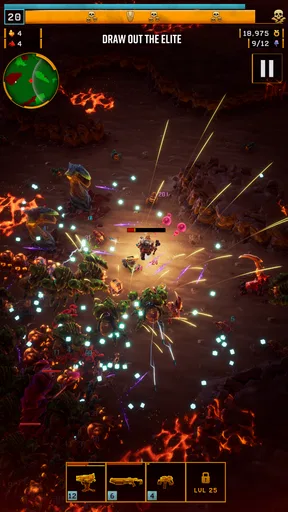
That distinction matters if you know the usual bullet-hell games. In a traditional example, I expect to aim and fire directly while reading dense patterns of incoming projectiles. Here, movement and positioning do more of the work: I have to keep space around my dwarf, avoid being boxed in, and use the changing cavern as part of the fight. It creates a different kind of attention. I’m not simply reacting to what is on screen; I’m deciding where I can safely move next, and which route might leave me room when the swarm closes in.
Why the first move matters
The first thing I would tell a friend is to treat movement as a decision, not as an afterthought. When enemies gather, an apparently open path can be more valuable than chasing a tempting target. I try to avoid drifting into a corner or letting a crowd seal off the only clear exit. That simple habit makes the action easier to read and gives me more options when the screen becomes hectic.
This is also why the game suits players who enjoy making quick adjustments more than players who want exact, hands-on control over every attack. The reverse bullet-hell setup puts a lot of weight on positioning. If you like finding a route through pressure and watching your build respond, that can feel satisfying. If you mainly want a conventional shooter in which precise manual aiming is the central skill, the automatic combat emphasis may take some getting used to.
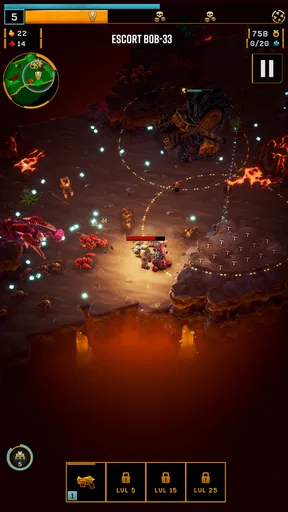
A useful way to approach a run is to notice not only what is chasing you, but what the cavern lets you do. Open space can buy time to circle around a threat; a narrow route can make a temporary escape look safer than it really is. I find it helps to look ahead while moving, rather than focus only on the nearest enemy. That small shift makes the game feel less like frantic retreat and more like a series of choices.
A Run Built Around Action, Feedback, and Another Try
I focus on how each attempt connects its action to its feedback, then turns the result into a reason to play again. That rhythm is most useful to judge before deciding whether this is a quick diversion or a game you’ll want to revisit. The next section looks at what a first run asks of you.
Getting Started: A Miner’s Life for Me
When I first launched Deep Rock Galactic: Survivor, I was immediately drawn into the atmosphere. The game kicks off by letting you choose your dwarf, each with their unique skills and equipment. Whether you’re the type to charge headlong into battle as a Gunner or prefer the stealthy approach of the Scout, there's a class that suits every playstyle.
The initial missions are designed to get you familiar with the controls and mechanics. Trust me, once you start drilling into those alien caverns, surrounded by glowing minerals and lurking dangers, it’s hard not to get hooked. The game does a fantastic job of balancing exploration with combat, keeping you on your toes throughout.
What the feedback rhythm feels like
The most satisfying moments come from seeing a decision pay off immediately. I move to escape a dangerous cluster, make room to keep going, and get a little breathing space to reassess. When that works, the feedback is clear: survival feels earned because I read the situation and adjusted, not just because enemies disappeared from view. When it doesn’t, I can usually see how I let my options narrow.
That rhythm is well suited to focused bursts. I can start a run with a rough plan, respond as the pressure changes, and come away with a specific lesson for next time. It’s more compelling than simply repeating the same attack, but it can also become tiring if I’m looking for a relaxed game that asks very little attention. The visual intensity and constant need to keep track of threats make this a game I prefer to play when I can give it a little focus.
For a practical first-session tip, resist the urge to judge a run only by its ending. Pay attention to the moment you lost room to move, or to the route that kept you safe longer. That gives you something concrete to change the next time you enter a cavern. In a roguelike, learning to recognize a bad position can be as useful as learning which enemy to prioritize.
The Thrill of Cooperative Play
One of the standout features of this game is its cooperative multiplayer mode. Playing with friends or teaming up with strangers adds a whole new layer of excitement. Communication is key here, and coordinating with your team can turn the tide in those intense firefights against alien swarms. Plus, let's be real, there's nothing quite like the satisfaction of successfully completing a mission with your squad.
The camaraderie that develops among players is real. Whether you're rescuing a fallen comrade or collectively panicking as a giant alien creature emerges from the shadows, these shared experiences make the game truly special. I found myself laughing, screaming, and strategizing with my teammates more often than I’d like to admit.
For anyone deciding whether this is the right Deep Rock Galactic experience, the solo-survival framing is important. It changes the social appeal that people often associate with the broader setting. I would choose a cooperative game when the main goal is talking with friends and coordinating roles; I would choose this arcade game when I want a self-contained challenge I can focus on alone. Those are different moods, and neither automatically replaces the other.
That makes it a sensible option for a quick gaming window when friends are unavailable or schedules do not line up. It also makes it less suitable if shared teamwork is the entire reason you are interested in the franchise. I would not pick it expecting the same kind of group planning and shared mission stories described above; its strongest draw is the personal rhythm of surviving a run and deciding what to do differently next time.
Graphics and Sound: A Feast for the Senses
Visually, Deep Rock Galactic: Survivor doesn't disappoint. The graphics might not be hyper-realistic, but they do a superb job of creating an immersive world. The alien landscapes are vibrant and varied, each mission offering something new to behold. The use of light and shadow, especially when exploring the darker caverns, adds to the tension and excitement.
Sound design deserves a special mention too. The soundtrack is both haunting and energizing, perfectly capturing the mood of each mission. The sound effects, from the clinking of your pickaxe to the ominous growls of alien creatures, are spot on. It’s this attention to detail that makes the game feel alive.
In busy moments, atmosphere is more than decoration: it helps make a run feel like a place rather than a plain arena. Still, the screen can be visually demanding when enemies and action crowd together. I would recommend taking a moment early on to learn how the game presents danger, instead of relying on a quick glance once everything is moving. The clearer I keep my attention, the easier it is to make a deliberate move rather than panic toward the first gap I see.
Challenges and Rewards
As you progress through the game, missions become more challenging, requiring strategic thinking and teamwork. I appreciated how the difficulty ramps up gradually, giving players time to hone their skills. And let's not forget the rewards! Successfully completing missions earns you resources to upgrade your gear. There’s an undeniable thrill in customizing your dwarf and watching them become a force to be reckoned with.
However, the game isn't without its challenges. Occasionally, I found the controls a tad clunky, especially during intense combat scenarios. Also, while the variety of missions is commendable, some might find the repetitive nature a bit off-putting after extended play sessions. But honestly, these are minor gripes in an otherwise stellar experience.
The reward loop works best for me when I treat each upgrade as a chance to test a different approach, not as a promise that every later run will be effortless. Making progress can give a run a satisfying aftertaste, but the immediate decisions still matter: a stronger setup won’t make poor positioning harmless. That trade-off is central to the game’s appeal. I enjoy having a reason to return, while still needing to pay attention once a new run begins.
If you only have a few minutes, it is worth asking whether you want to start a run or simply browse for something calming. This is built around active play, and a run can be more engaging than a passive time-filler. I would save it for a break when I can concentrate, rather than opening it while distracted and expecting the game to make all the decisions for me.
There is also a useful distinction between unlocking a reward and enjoying the process of earning it. If the moment-to-moment movement and pressure feel satisfying, the next attempt has a natural purpose. If those parts already feel repetitive, a future upgrade may not change your mind. I would give the core loop a fair try before deciding whether long-term progression is enough of a reason to keep playing.
Who will enjoy another run
Ghost Ship Publishing ApS is the developer, and the game is free to start, with in-app purchases priced from $4.99 to $14.99 per item. It has a 4.5 average from around 21,000 ratings, with roughly 1,100 written reviews and over 500,000 installs. Those figures suggest a substantial audience, but I would still judge it by whether the reverse bullet-hell format is your kind of action, rather than by popularity alone.
It is rated Teen, and the current version is 1.0.9, with Android 8.1 as the minimum operating-system requirement. Those details are useful when deciding whether it suits your device and household. The game’s free entry point lowers the commitment involved in trying it, while the listed purchases are a reason to be thoughtful about spending. I would first see whether the basic run-and-reset loop holds my interest before considering any purchase.
A realistic use case is a quiet evening when I have a short stretch of time, want something more involved than a casual tap game, and do not have a group ready for multiplayer. I can focus on one attempt, notice where I made a poor route choice, and decide whether I want another. It also works for players who like arcade action with a learning curve, especially if they enjoy the way roguelikes turn a failed attempt into useful knowledge.
I would steer away from it if you dislike repeated attempts, want a story-first adventure, or expect a conventional shooter built around direct aiming. It may also be a poor fit when you want a low-pressure game to play while your attention is elsewhere. In those cases, a slower exploration game or a more traditional cooperative shooter may better match what you want from a session.
Compared with arcade games that keep the player in a fixed arena, the mining-cavern setting gives movement and surroundings a stronger role in how I handle pressure. Compared with a standard bullet hell, the focus shifts from precise manual fire toward positioning and survival. That difference is the point, not a flaw to overlook: the game feels fresh if that change appeals to you, but less satisfying if you came specifically for direct control over every shot.
For a new player, I’d recommend changing one habit at a time. First, practice keeping a route open; next, notice which situations make the screen hard to read; then see whether a different approach to a run changes how long you can stay in control. It is more informative than trying to master everything at once. This also makes a failed attempt easier to interpret: rather than deciding the game is unfair, you can ask whether you were cornered, distracted, or simply still learning its pace.
Final Thoughts: To Dig or Not to Dig?
So, is Deep Rock Galactic: Survivor worth your time? In my humble opinion, absolutely! It combines the thrill of exploration with the excitement of cooperative gameplay, wrapped up in a beautifully crafted alien world. Whether you’re a solo player or someone who thrives on teamwork, this game has something to offer.
Give it a try, and who knows, you might just find yourself chanting "Rock and Stone" alongside your fellow dwarves. Just remember, in the depths of space, it’s always best to keep your friends close and your pickaxe closer. Happy mining!
My recommendation comes with one clear condition: enjoy the act of reading danger, moving through it, and starting again. That is what makes the next session tempting. The arcade action can feel repetitive over a long stretch, and the controls may take patience when the screen gets crowded, so I would play in focused sessions rather than expect every run to feel new. If that loop clicks, the game offers a satisfying reason to return; if you want a social expedition or a slower, story-led journey, I’d choose something else.
Verdict
Strengths of Deep Rock Galactic: Survivor
- Immersive graphics enhance gameplay.
- Co-op mode is highly engaging.
- Diverse character classes add depth.
- Unique missions keep it exciting.
- Replayable with different strategies.
Limitations of Deep Rock Galactic: Survivor
- Requires a stable internet connection.
- Can be resource-intensive on devices.
- Learning curve for new players.
- In-app purchases can be pricey.
- Limited offline functionality.
Similar Picks in This Category
View All
Subway Surfers
SYBO Games4.6

Stickman Party 234 MiniGames
PlayMax Game Studio4.6

Subway Princess Runner
Ivy4.4

Temple Run
Imangi Studios4.2

Zombie Tsunami
Mobigame SAS4.6

Stack Ball - Crash Platforms
CASUAL AZUR GAMES4.5
Frequently Asked Questions
What is Deep Rock Galactic: Survivor?
Deep Rock Galactic: Survivor is a mobile adaptation of the popular co-op first-person shooter. In this game, players take on the role of dwarven miners exploring dangerous, procedurally generated caves filled with alien creatures. The game emphasizes teamwork, resource gathering, and survival in a hostile environment.
Is Deep Rock Galactic: Survivor available on both Android and iOS?
Yes, Deep Rock Galactic: Survivor is available for download on both Android and iOS platforms. Players can enjoy the game’s thrilling cooperative gameplay across different devices, ensuring a wide audience can experience the excitement of mining and battling aliens on the go.
Does Deep Rock Galactic: Survivor support multiplayer mode?
Absolutely, Deep Rock Galactic: Survivor is designed with multiplayer in mind. Players can team up with friends or other players online to tackle challenging missions together. Cooperation and strategy are key to surviving the treacherous environments and overwhelming alien threats.
What are the main features of Deep Rock Galactic: Survivor?
The game features procedurally generated caves, ensuring unique experiences each playthrough. Players can choose from different classes, each with unique abilities and weapons. The game emphasizes teamwork, resource management, and offers a variety of missions that require players to adapt their strategies for success.
Are there in-app purchases in Deep Rock Galactic: Survivor?
Yes, Deep Rock Galactic: Survivor includes in-app purchases. These can range from cosmetic items to game-enhancing features. While the game can be enjoyed without spending money, some players may choose to enhance their experience through these optional purchases.
Play our best games!


